The Ultimate Guide to Pool Water Chemistry
Proper water chemistry is the foundation of a healthy pool. Understanding the key parameters and how they interact will help you maintain crystal clear, safe water for your family.
Chlorine is your primary sanitizer, keeping bacteria and algae at bay. Free chlorine levels should be maintained between 1-3 ppm for residential pools. Too little means inadequate sanitization, while too much can cause skin and eye irritation.
pH measures how acidic or basic your water is on a scale of 0-14. Pool water should be maintained between 7.2-7.6. Low pH causes corrosion of equipment and surfaces, while high pH reduces chlorine effectiveness and can cause scaling.
Alkalinity acts as a buffer for pH, preventing rapid pH swings. Total alkalinity should be kept between 80-120 ppm. This is often the first parameter to adjust when balancing your water.
Calcium hardness prevents your pool water from becoming corrosive to plaster and equipment. Ideal levels are 200-400 ppm. Low calcium can damage pool surfaces, while high calcium causes cloudy water and scaling.
Stabilizer (cyanuric acid) protects chlorine from UV degradation. Outdoor pools should maintain 30-50 ppm. Without stabilizer, chlorine breaks down quickly in sunlight.
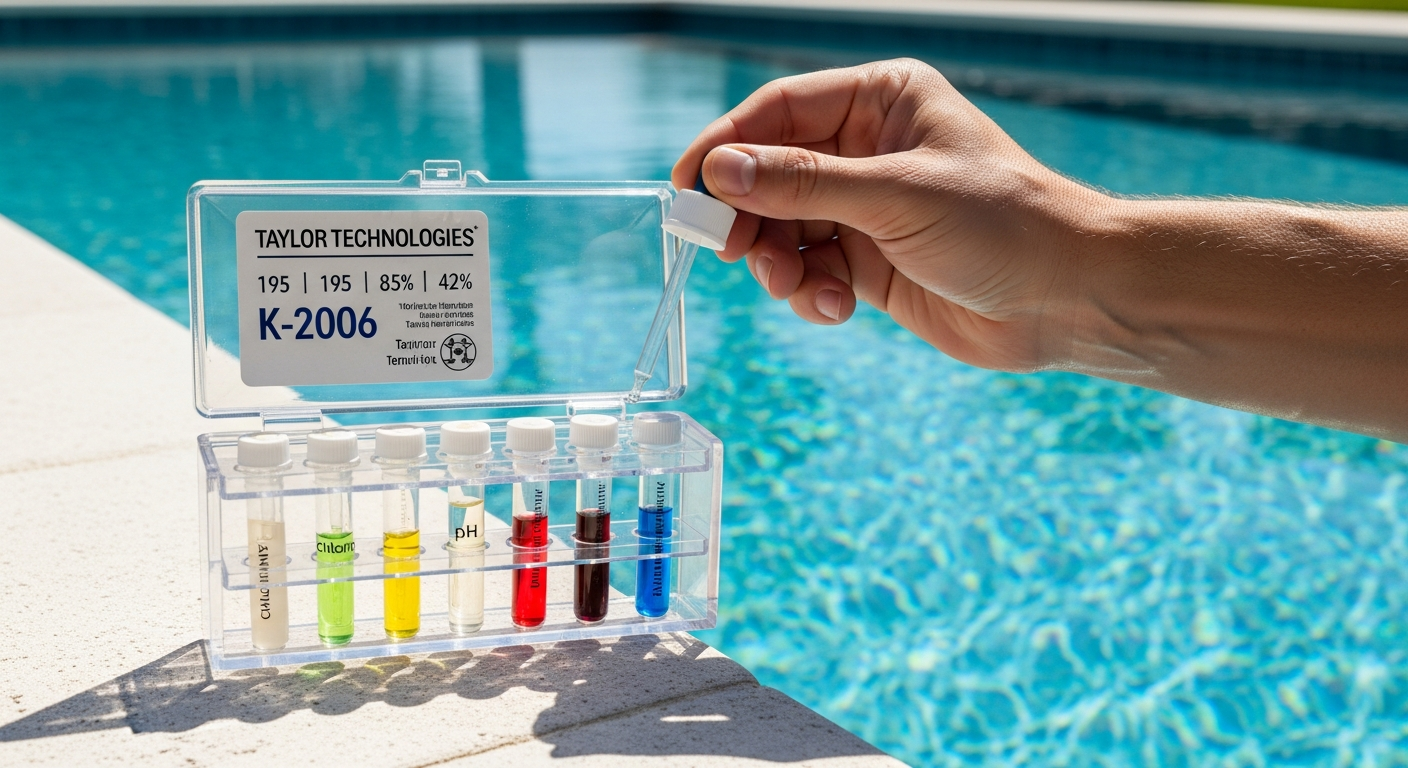
At Rising Sun Pool & Spa, we test all these parameters weekly using professional-grade Taylor test kits to ensure your pool water is perfectly balanced and safe.